
A Conversation About Much More Than Communication
For the inaugural edition of Global Leaders Chronicle, an editorial publication by Bangladesh Business Bureau (BBB), we explore Denise Rabin’s journey through education, journalism, professional setbacks, entrepreneurship and women’s leadership.
In this conversation, Denise reflects on the importance of practical experience, professional relationships, empathy, continuous learning and the courage to reinvent oneself.
Her perspective also carries a message for university students and emerging professionals: meaningful careers are rarely built overnight. They develop through experience, curiosity, resilience and a willingness to contribute – even when the responsibilities appear small.
In Conversation with Denise Rabin
From the classroom to international newsrooms and from producing influential voices to empowering women leaders, Denise shares the experiences and lessons that have shaped her career.
GLC: Denise, before becoming a journalist, producer, educator, and communication strategist, what kind of student were you during your university years and what experiences outside academics shaped you the most?
DR: I studied Journalism at the University of Salvador in Buenos Aires, Argentina. During my university years, I was an average student, sometimes getting good grades and sometimes not-so-good ones. During the first two years, I felt a bit bored because everything was very theoretical. In my third and fourth years, I really enjoyed university because the work became much more practical, and that was when I felt truly stimulated.
Outside the academic environment, I started doing journalism internships during my second year. That experience opened my mind and also opened doors to valuable professional contacts.
GLC: Looking back now, do you think there were any early habits, campus activities, or personal interests during student life that quietly prepared you for the communication world?
DR: I have always been a creative person who enjoyed writing and creating stories. I do not remember any specific habits or activities, but I do remember taking a career orientation test and every result pointed toward communication.
GLC: Many students worry because they do not have everything figured out while studying. Did you always know journalism and communication would be your path, or did clarity come gradually through experience?
DR: Not at all. For many years, I thought I would become a lawyer. During my final year of high school, I realized that law was not the right path for me.
At that time, the degree was called Social Communication, and after two years students had to choose between advertising and journalism. When I started university, I thought I would choose advertising, but after only a few weeks of classes, I realized that journalism was the right choice for me

GLC: Your early career started in demanding media environments. What were some of the biggest realities or shocks you faced when moving from student life into the professional newsroom?
DR: For me, university is only the beginning, the base, while my first professional experiences completed my education. In fact, many of my first job opportunities came through university professors. This demonstrates that university is also an important professional network, probably your first professional network.
15 years ago, for me, it was very stimulating to see how some tasks I did at university, such as editing videos, for example I then started doing in my first work experiences.
GLC: In those first few years of your career, was there any difficult moment that made you question yourself, and what helped you keep moving?
DR: I experienced a very difficult moment during university. Halfway through my first year, I was involved in a serious car accident and spent nearly a year recovering while continuing my studies.
I did not want to stop studying because I was afraid I would never return. After recovering, and after living through one of the most intense years of my life, I decided to take half a year off to process what had happened and recover emotionally.
It turned out to be a very good decision, and I returned to my studies shortly afterward. In many ways, going back to university was my way of saying yes once again to the path I had chosen.
GLC: You later worked with leading media organizations such as La Nación, América TV, A24, and CNN en Español. What helped you grow from simply doing tasks to becoming someone trusted with major editorial responsibilities?
DR: I believe there is a professional path that must be followed step by step, and there is no better school than experience itself.
In television production, I performed every task possible, and I learned from each one. New responsibilities arrived when I was ready for them, and because my base was strong, I never felt insecure when facing new challenges.
GLC: Having worked in journalism, production, teaching, and entrepreneurship, what professional lesson took you the longest time to truly understand?
DR: In most professions, we work with managers, colleagues, and people who report to us. We spend many hours together.
That is why social skills, empathy, and understanding others are essential. You can have perfect grades at university, but if you are not a good colleague, you will not be a good professional.
GLC: Communication is often seen as “just speaking well,” but your career shows it is much deeper. What key skills actually make someone effective and respected in this field?
DR: Speaking well is important, but the entire experience surrounding communication is even more important.
Time management, stage presence, and understanding how to connect with an audience all matter. Effective communication is never just one thing. It is the combination of many skills working together.
GLC: In high-pressure media and leadership environments, how important are skills like critical thinking, adaptability, and emotional control compared to academic qualifications?
DR: As I mentioned earlier, soft skills are just as important, if not more important, than academic credentials, especially when dealing with news, public information, or sensitive issues.
GLC: After years in mainstream journalism, you chose to co-found Mujeres Speakers to amplify women’s voices. What inspired that shift, and what leadership lesson came from building something of your own?
DR: My business partner and I met while working at CNN, and we noticed that it was often more difficult for women to access spaces of visibility and influence.
That is why we founded Mujeres Speakers four years ago: to help professional women navigate their communication challenges.
The biggest lesson for me was the transition from being a journalist and producer to becoming a business owner. The mindset shift and the learning process were profound. Ultimately, I believe we must continue studying and learning throughout our entire lives.
And it’s perfectly fine if at some point in your career you feel the need to reinvent yourself and change course!
GLC: Based on your experience mentoring communicators and professionals, what are some common mistakes young people make when trying to build a career in media, communication or leadership?
DR: Sometimes young professionals want to skip stages. Professional development, learning, and gaining experience take time.
And also the ego can work against them. I remember a young professional who became upset because he no longer wanted to serve coffee to guests on a television program.
From my first day until my last day in production, I served coffee when necessary, and I would still do it today. It is simply part of the profession. There is no need to dramatize those responsibilities. We all do things at our jobs that we like more or less. All of those tasks are important.
GLC: Finally, for university students watching from Bangladesh who want to build confidence, credibility, and a meaningful career, what would be your strongest advice to help them start now?
DR: I would encourage students to take a more active role in the classroom and make themselves visible to their professors.
Many professors are involved in companies and organizations related to the fields they teach, and through those relationships, first professional opportunities can emerge. University is not only a place to learn; it can also become the beginning of your professional network and also friends or even love.
Some of my best friends are from the university and they are journalists too.
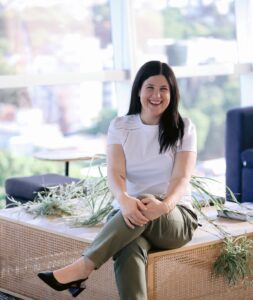
About the Guest:
Denise Rabin
Founding Partner, Mujeres Speakers.
Communication strategist, production coordinator, and journalist.
Denise has worked for CNN en Español, La Nación, and RAI Italia, among other media outlets, and has produced for some of Argentina’s most prestigious journalists. Since 2019, she has been a member of the board of directors of the Argentine Journalism Forum (FOPEA) and has taught at the Catholic University of Argentina (UCA).